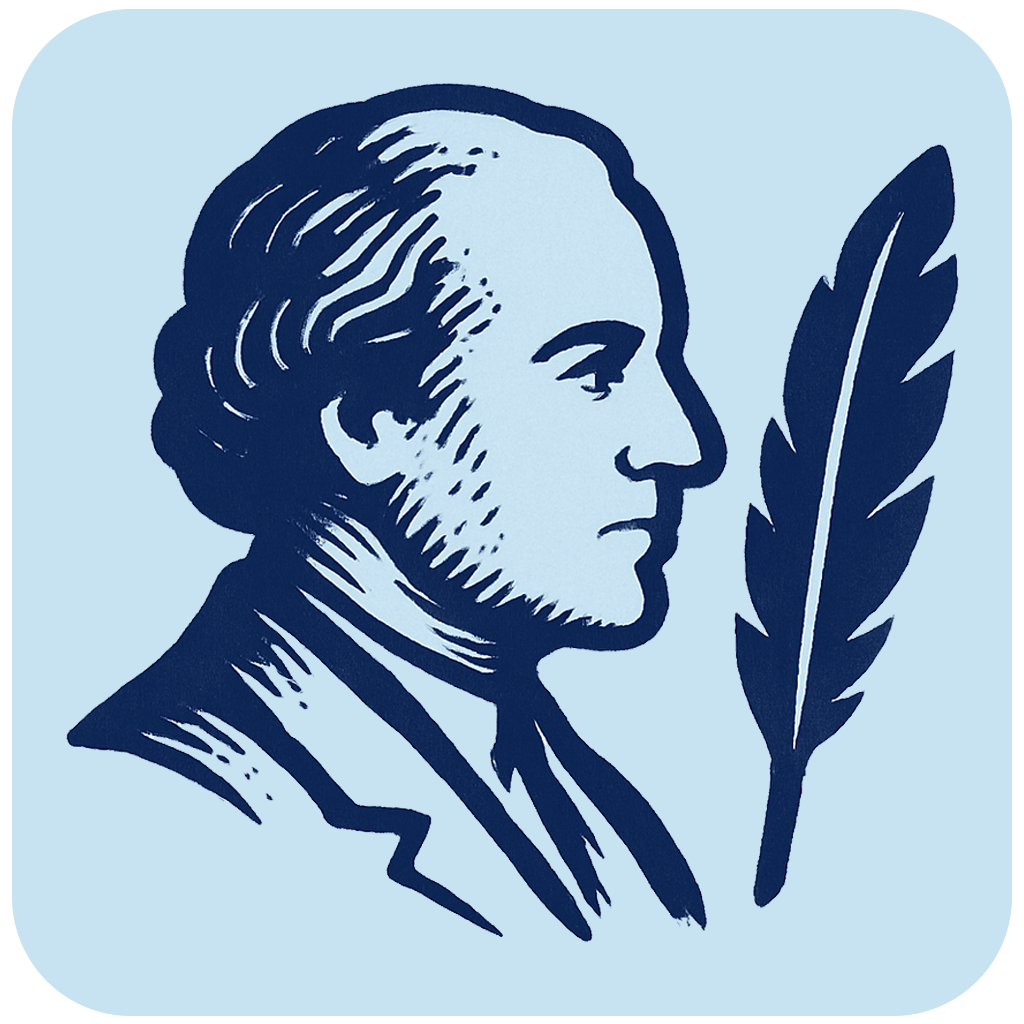
Wilhelm Ostwald
Wilhelm Ostwald (1853–1932) was German chemist and philosopher.
Friedrich Wilhelm Ostwald, a Baltic German, was born in Riga (then in the Russian empire, now Latvia) on 2 September [O.S. 21 August] 1853 and died Leipzig, Germany, on 4 April 1932. He was one of the founders of physical chemistry and received the Nobel Prize in 1909. In 1906 he retired from academic life and made contributions to philosophy, art, and politics. He pioneered sabbatical leave by being the first "exchange professor" at Harvard University in 1904 and 1905.
Life and Career
Ostwald entered the University of Dorpat (now the University of Tartu, Estonia) in 1872 and had significant exposure to the humanities, the arts, and philosophy. He continued there as a research assistant and received his Magister degree in 1877 and doctorate in 1878.
In 1881, Ostwald became a Professor of Chemistry at the Riga Polytechnicum (now Riga Technical University) and in 1887, he moved to Leipzig University where he became Professor of Physical Chemistry and led the Institute for Physical Chemistry until his retirement in 1906. He had several distinguished students including Emanuel Goldberg.
This article is concerned with his involvement in documentation and information science. For all other aspects of his life and work see "Wilhelm Ostwald" Wikipedia [[1]].
Work related to Documentation
- The structure of research literatures. Ostwald wrote and edited prodigiously with a clear sense of the purpose and roles of different genres.
- International standard paper sizes. in 1911 Wilhelm√ Ostwald proposed a world format (Weltformat) based on the aspect ratio 1:√2 (approx. 1:1.414) which folded in half retains the same aspect ration. This became, with minor changes the present international standard (ISO 216) that includes the widely used A4 size.
Die Brücke
Inspired by Paul Otlet and the International Institute for Bibliography, Ostwald founded Die Brücke - Internationales Institut zur Organisierung der geistigen Arbeit (The Bridge - International institute to organize intellectual work) in Munich in 1911, largely funded by his Nobel Prize money.
Further Reading
Hapke, Thomas. "Wilhelm Ostwald, the “Brücke” (Bridge), and Connections to Other Bibliographic Activities at the Beginning of the Twentieth Century," In: Proceedings of the 1998 Conference on the History and Heritage of Science Information Systems. Ed. by Mary Ellen Bowden, Trudi Bellardo Hahn
& Robert V. Williams. Published for the American Society for Information Science and Technology and the Chemical Heritage Foundation by Information Today, Medford, NJ, 1999, pp. 139-47. [[2]]