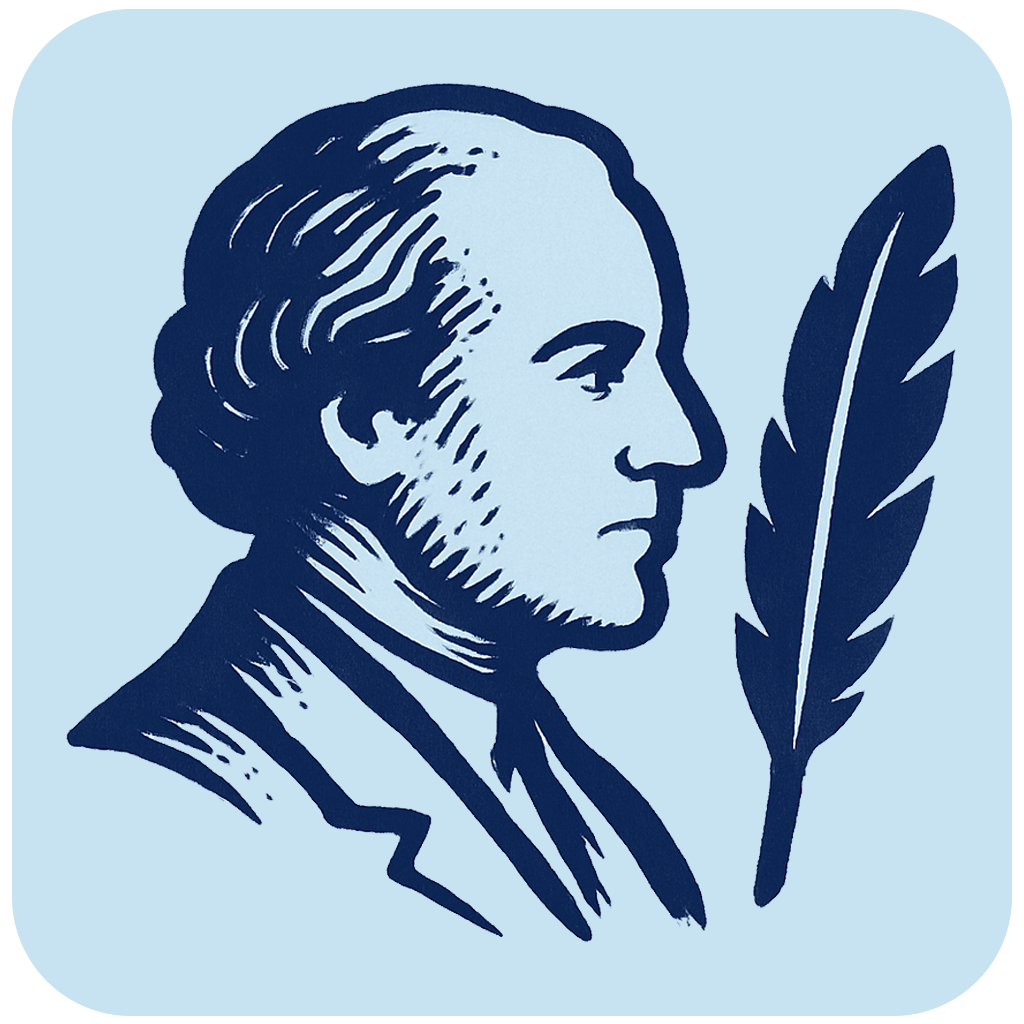
Edwin Slosson
Edwin Slosson (1865-1929) was an American chemist and journalist.
Life
Edwin Emery Slosson was born June 7, 1865 in Albany, Kansas. He earned a BS in Chemistry at the University of Kansas in 1890 and continued as a graduate student studying chemistry, physics, geology and psychology and was awarded a MS degree in 1892.
From 1891 to 1903 Slosson lived in Laramie, Wyoming, where he taught all the chemistry courses at the University of Wyoming. He also taught popular extension courses in chemistry to community members, a course in experimental psychology, and lectured on photography to the local Camera Club.
Slosson carried out chemical research at the Wyoming Agricultural Experiment Station, which was associated with the university. He also acted as state chemist. His work was published in numerous bulletins of the Experiment Station and he was awarded his PhD at the University of Chicago summa cum laude in 1902. He participated as a special demonstrator in chemistry at the 1893 Chicago World's Fair.[3]
While living in Laramie he contributed articles to The Independent, a weekly magazine published in New York. In 1904 he moving to New York to become the literary editor of The Independent and a contributor. His journalism formed the basis for several books. From 1912 to 1920 he taught a course on physical science for journalists at the Pulitzer School of Journalism, Columbia University, New York.
Slosson was the founding director of Science Service in Washington, DC,from January 1921 until he died on October 15, 1929 in Washington, DC.
Contributions
Science Service
Science Service was organized in 1920 by biologist William Emerson Ritter and the newspaper publisher E.W. Scripps with the aim of improving the general public's understanding of science by providing scientific news to daily newspapers. Slosson was the founding director (with the title "Editor") and was responsible for organizing and staffing the agency. His initial efforts were concentrated on promoting and developing science journalism by the means of a weekly syndicated news service called Science News Bulletin. Slosson described Science Service as "a sort of liaison officer between scientific circles and the outside world".[12]Science News Bulletin was well received and in September 1922 it began to be issued to newspapers and magazines daily rather than weekly.[10] Also in 1922, Science Service started publishing Science News Letter, a weekly magazine for sale to individuals.
which was in operation in the twenties. He was associate editor, New York Independent. He was considered second only to Cattell among scientific editors according to Farkas-Conn. He was director, Science Service 1925-28. "A scientist turned publicist". He studied the nation's universities. He became a spokesman for the concentration of academic resources.
His writings "helped shift attention of philanthropic organizations to the needs of the research universities." He knew much needed to be done to gain massive funding to "allow American scientists into the circle of world-class research." He believed science should be popularized. He wrote dozens of articles/books to convince the American people and legislators to subsidize research (Burke). Slosson also wrote
Publications
Slosson published a great many articles and many books.
- Great American Universities. New York: Macmillan, 1910. [1]
- Major Prophets of Today. Boston, MA: Little, Brown, 1914. [2]
- Six Major Prophets. Boston, Little, Brown, and Co., 1917. [3]
- Creative Chemistry. New York : Century Co., 1919. A collection of articles about industrial applications of chemistry. His most successful publication, a bestseller. [4]
- "A new agency for the popularization of science." Science 53, no. 1371 (1921): 321-323.
Awards
Offices
Further reading
- Biographical memoir by Preston W. Slosson in: A number of things, by Edwin E. Slosson. New York, Harcourt, Brace and Company, 1930, pp 3-33.
- Howe, H. E. "Edwin E. Slosson." [Obituary] Science 70, no. 1819 (1929): 443-444. [5]
- See "Historical Note: Science Service" within ,
Papers
- Smithsonian Institution Archives, Record Unit 7091, Science Service, Records. 1902-1965. Consists of records documenting the daily activities of Science Service and the professional activities Edwin E. Slosson and Watson Davis. Very extensive finding aid. [6]
- Papers dates: circa 1910-1963
- Size: total collection: 183 cubic feet
- Includes: This collection consists of records documenting the daily activities of Science Service and Watson Davis. Unarranged, with the following apparent divisions: 1. Daily Mail Reports-Science Page; 2. Executive Committee minutes and reports, 1923-1942; 3. Edwin E. Slosson, personal files, circa 1910-1920; 4. Director's files, circa 1921-1928; 5. Managing editor, circa 1922-1925; 6. Watson Davis, personal files; 7. Manger of Science Service, circa 1921-1925; 8. General correspondence, 1927-1963; 9. American Documentation Institute, circa 1938-1946; 10. Syndicated correspondence, circa 1954; 11. Latin American translations, circa 1940-1950; 12. National Inventor's Council, circa 1940-1949; 13. Interlingua files; 14. Knud Rasmussen Expedition, 1920; 15. UNESCO, 1948-1951; 16. Rockefeller Foundation Survey and Conferences; 17. Photographs, posters, and cartoons; 18. CBS radio talks, circa 1939-1959.