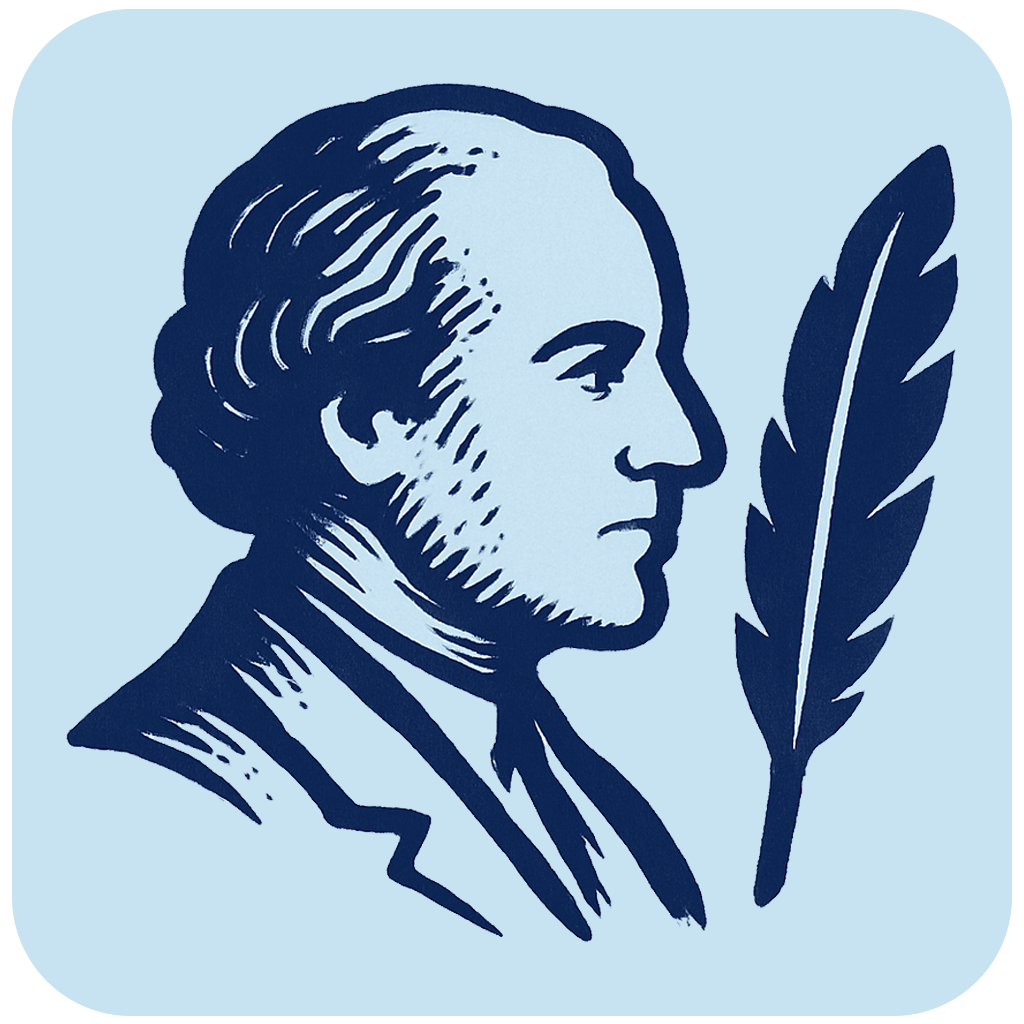
Herbert Haviland Field
Herbert Haviland Field (1868-1921), an American zoologist, founded the Concilium Bibliographicum.

Life
Herbert Haviland Field was born in Brooklyn on April 25, 1868. He studied zoology at Harvard University and earned a PhD in 1893. He then traveled to Europe for further studies. Committed to social idealism and international peace, he dedicated himself to improving bibliographical access to biological literature and founded the Concilium Bibliographicum in Zurich, Switzerland, in 1895. [1]
World War I cut the Concilium Bibliographicum off from sources and customers, so Field spent the war working for the Quaker’s relief agency in Europe. He also worked as an intelligence asset for the United States under Allen Dulles who later headed the Central Intelligence Agency. He died on April 4, 1921, in Zurich.
Contributions
Field created the Concilium Bibliographicum, which was initially financed from personal and family funds. He aimed at completeness of coverage in all languages and precise classification using the Universal Decimal Classification, but did not include abstracts. Card files were copied and mailed to subscribers. Although he was unable to make his service financially self-sustaining, by 1903 some 13,000,000 cards had been sent to over 600 subscribers. The Concilium Bibliographicum struggled after Field's death and the impact of World War II led to its termination. [2]
Field collaborated with Paul Otlet at the International Institute for Bibliography in Brussels and helped to develop the Zoology section of the Universal Decimal Classification. He also persuaded Otlet to adopt the 75mm x 125mm card standard.
After World War I, Field aided the new League of Nations’ efforts to rebuild the world’s science information systems.
Publications
Burke's Illustrative Bibliography, Information and Intrigue and Related Volumes (2018) lists 29 publications. [3]
- "Bemerkungen über die Entwicklung der Wirbelsäule bei den Amphibien; nebst Schilderung eines abnormen Wirbelsegmentes." [Remarks on the development of the spine in amphibians; including a description of an abnormal vertebral segment]. Morphologisches Jahrbüch 22 (1895): 340-356.
- "An International Zoological Record." Nature 47, no. 1226 (1893): 606-607. [4]
- "Bibliographical Reform and the Zoological Record." Natural Science: a Monthly Review of Scientific Progress 6 (1895): 333-5.
- "The New Bibliography Bureau for Zoology." Science NS 2, no 34 (August, 1895): 234-237.
- "The Work of the Concilium Bibliographicum." The American Naturalist 32 384 (Dec. 1898): 925-928.
- "Progress of the Concilium Bibliographicum." Science NS 19, 490 (May 20, 1904): 802-5.
- "A brief account of the foundation of the Concilium Bibliographicum." Annotationes Concilii Bibliographici 3 (1907): 1-5.
Further reading
- Burke, Colin B. Information and intrigue: From index cards to Dewey Decimals to Alger Hiss. Cambridge, MA: MIT Press, 2014. A detailed biography.
- Burke, Colin B. Illustrative Bibliography, Information and Intrigue and Related Volumes. May 2018. [5]
- Kupper, Patrick. "'Verschollen in den Alpen': Herbert Haviland Fields bibliografische Reform". ['Lost in the Alps': Herbert Haviland Field's bibliographic reform]. In: Kupper, Patrick; Schär, Bernhard C. (eds.). Die Naturforschenden: Auf der Suche nach Wissen über die Schweiz und die Welt 1800–2015. Baden, Switzerland: Hier und Jetzt, 2015, pp. 103–119.
- Burke, Colin B. & M. K. Buckland. "Herbert Haviland Field (1868–1921): Bibliographer of Zoology." Bulletin of the Association for Information Science and Technology 42, no 6 (2016): 10-14. [6]
- Buckland, Michael K. & C. B. Burke. "Precise zoological information: The Concilium Bibliographicum". Bulletin of the Association for Information Science and Technology 42, no 6 (2016): 15–19. [7]
- Rayward, W. B. The universe of information: The work of Paul Otlet for documentation and international organisation. Moscow: FID. (FID 520)
Papers
- Hoover Institution Library and Archives (Stanford, CA). Diary and reports relating to political and economic conditions in Bavaria. [8]