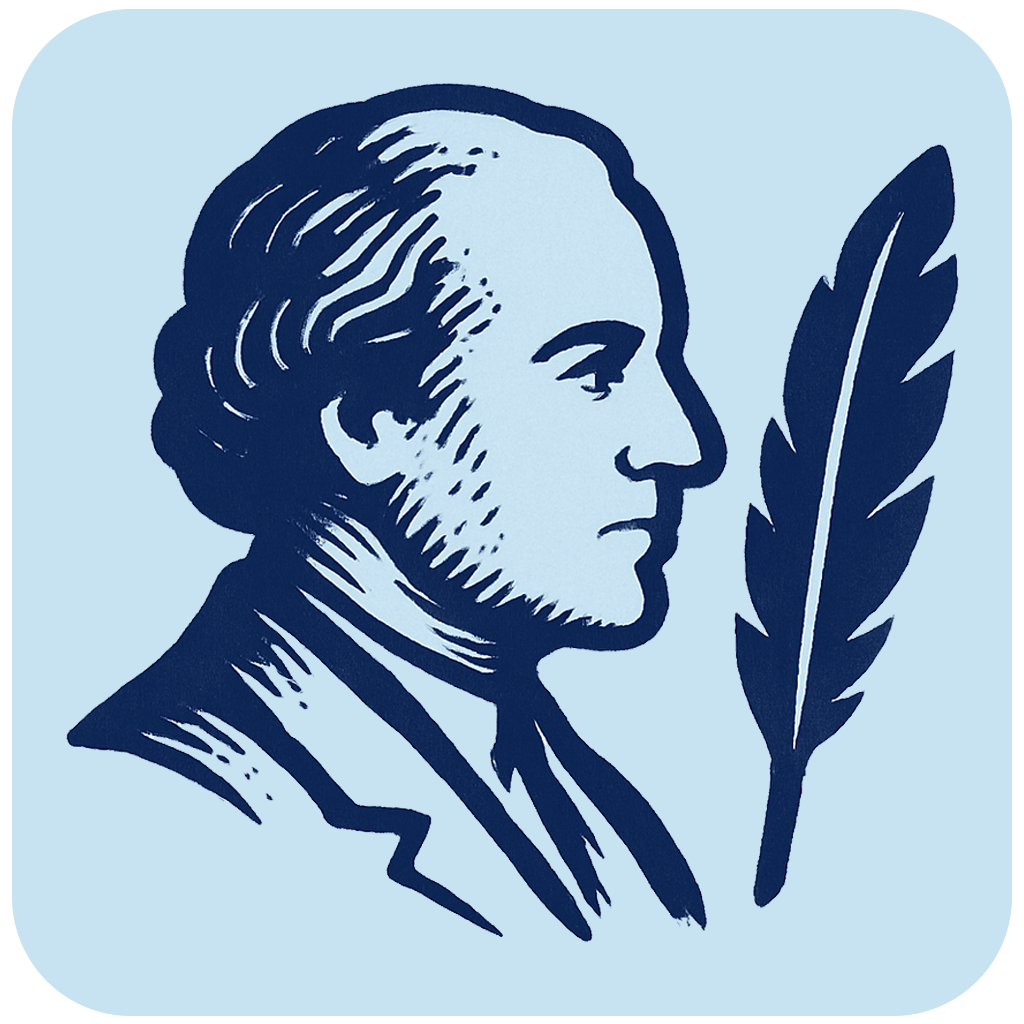
Manfred Kochen
Manfred Kochen (1928-1989) was a American information science and computer researcher.

Credit: rosefirerising. (1987). Flikr. https://creativecommons.org/licenses/by-nc-nd/2.0/
Life
Manfred Kochen was born on July 4, 1928 in Vienna, Austria, and came to the USA as a child. He earned a BS (1950) in Physics from MIT and an MA (1951) and PhD (1955) in mathematics from Columbia University, New York.
He was a lecturer at Columbia University, New York City, 1950-1951; Mathematician at Biot & Arnold, New York City, 1950-1953 & Paul Rosenberg Associates, Mount Vernon, NY, 1953-1955. He was also a programmer-analyst in von Neumann's computer project at the Institute Advanced Study, Princeton, NJ, 1953-1955. Kochen Manager was a scientist and member of the technical staff at the International Business Machines Corporation Research Center, Yorktown Heights, New York, 1956-1964.
In 1965 Kochen moved to the University Michigan, Ann Arbor, where he had various roles. He was a professor of information science in the University of Michigan Mental Health Research Institute (MHRI) from 1965, and from 1980, adjunct professor of computers and information systems in the Business School and chairman of the sociotechnological systems area of the Doctor of Philosophy Program in Planning, 1984-1987.
He died in 1989 in Colorado.
Contributions
Worked on the Neumann computer project at Princeton's Institute for Advanced Study, 1953-55; research mathematician, IBM, 1955-1964; Univ. of Michigan, 1965-1989. Consultant to a wide variety of scientific organizations.
Kochen believed that "authoritative, accurate, easy to access, and easy to understand information could some day be provided to anyone who sought it on almost any topic of interest. He saw collaboration as the key to solving many large problems--in this saw an opportunity for efficient and effective communication by personal networking, avoiding the slow established organizational channels that often separate us" (In Memoriam).
At IBM, he analyzed information needs of scientists and also studied and evaluated information systems. until his death in 1989 in Colorado.
Publications
Kochen is said to have authored and edited over 250 publications, including 8 books. Garfield (1989, 168) lists 28. More are listed by dblp [1] and Google Scholar [2]
- The growth of knowledge; readings on organization and retrieval of information. Ed by M. Kochen. New York: Wiley, 1967.
- "Information-seeking behavior of catalog users." With R. Tagliacozzo. Information storage and retrieval 6, no. 5 (1970): 363-381. [3]
- "Progress in documentation: WISE: A World Information Synthesis and encyclopedia." Journal of Documentation 28, no 4 (1972): 322-343.
- "On the precision of adjectives which denote fuzzy sets." With A. N. Badre.Journal of Cybernetics 4, no. 1 (1974): 49-59.
- Principles of information retrieval. Los Angeles: Melville Pub. Co., 1974.
- "Applications of fuzzy sets in psychology." In: Fuzzy sets and their applications to cognitive and decision processes, pp. 395-408. Academic Press, 1975.
- "Contacts and influence." With I. de Sola Pool. Social networks 1, no. 1 (1978): 5-51.
- "How well do we acknowledge our intellectual debts." Journal of documentation 43 (1987): 54-64. Reprinted in Current Comments No 25 (June 19, 1989): 170-177. [4]
- "Recall‐precision trade‐off: A derivation." With M. Gordon. Journal of the American Society for Information Science 40, no. 3 (1989): 145-151. [5]
Further reading
- Garfield, E. "Manfred Kochen: In memory of an Information Scientist Pioneer qua World Brainist." Current Comments No 25 (June 19, 1989): 166-169. [6]
- Lancaster, F.W., S. Bushur & Y. M. Low. "Kochen's influence examined bibliometrically." Library Trends 41, no 4 (Spring 1993): 549-566. A bibliometric evaluation. [7]
- DeBeer, C.S. & Roux, P.J.A. "Manfred Kochen and the growth, integration, and fragmentation of knowledge." South African Journal of Library & Information Science 61 (September 1993): 101-108.
- "Manfred Kochen." Prabook Biographical details. [8]
Papers
- University of Michigan Library, Ann Arbor, MI. Material in multiple collections. Search finding aids. [9]