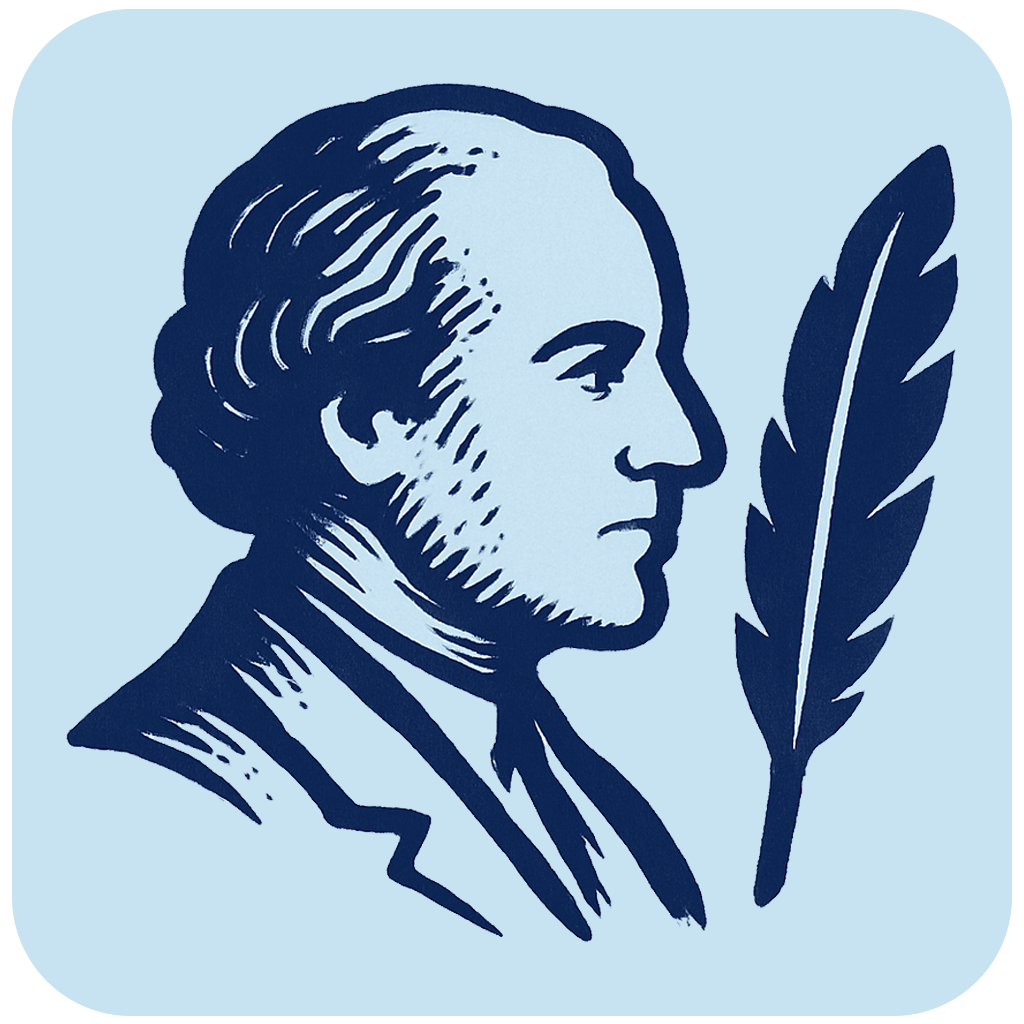
Ralph Robert Shaw
Ralph Shaw (1907-1972) was a US librarian and bibliographer.
Life
Ralph Robert Shaw was born in Detroit, Michigan on May 18, 1907. He grew up in Cleveland, and obtained his B.A. from Western Reserve University in 1928. His interest in science librarianship was sparked while an undergraduate, by his job in the Cleveland Public Library's Department of Science and Technology. He enrolled in the Columbia University School of Library Service and received a B.S. (1929) and an M.S.(1931) from that institution. Shaw's lifelong interest in the scientific management of libraries began during his time in New York.
He found ample opportunity to further develop and put into practice his ideas when he became the librarian of the Gary, Indiana Public Library in 1936. While in Gary, Shaw began work on his Ph.D. at the University of Chicago's Graduate Library School. In 1940, Shaw moved on to the U.S. Department of Agriculture's library.
While at the library (which eventually became the National Agriculture Library), Shaw continued to pursue his interest in the use of machines to improve the productivity and efficiency of library operations. During his fourteen-year tenure at the library, he invented and patented the Photoclerk and worked unsuccessfully with Engineering Research Associates to revive the Microfilm Rapid Selector design of Vannevar Bush and patented a coding system for it. Long rolls of microfilmed documents were searched at very high speed using pattern recognition (by photoelectric cells) of encoded metadata next to the images of documents (Burke 1994).
During his career, Shaw became an internationally respected figure in librarianship. He was a member of, as well as a consultant and advisor to, a wide range of national and international library committees and organizations concerned with library and bibliographic activities. During the 1950's, Shaw was actively involved in the American Documentation Institute . He was an associate editor of American Documentation from 1950-1957.
Shaw was also keenly interested in library education. In 1954, he joined the faculty of the Graduate School of Library Service at Rutgers University. He served as Dean from 1959 to 1961 and helped to develop a respected program that included courses in bibliography, documentation and scientific management, a concept he helped introduce to the profession as a means of solving certain library problems.
Shaw was the Dean of Library Activities 1966 to 1969 at the Hamilton Library at the University of Hawaii at Manoa. He died on October 14, 1972.
Ralph Shaw left a significant mark in the fields of information science and librarianship. "As a bibliographer, he supervised the production of one of the major scientific and one of the major retrospective national bibliographies." The influence of his work and ideas will carry on for years in his former students, many of whom are today's leaders. The press he founded in 1950, Scarecrow Press, continues to produce high quality works in librarianship and other fields. His efforts as an inventor "helped to make possible much of the sophisticated use of technology in libraries." A critic of grandiose claims for the capabilities of machines, Shaw's challenges helped create a realistic basis for the intelligent use of machines.
Contributions
Shaw established the Graduate School of Library Studies at the University of Hawaii. He served on numerous ALA committees. He was associated with the discovery and pioneering of information science. He was involved with work on the Photoclerk. He worked with international organizations - consulting and advising on bibliographic activities. In 1950, Shaw founded Scarecrow Press. He came up with mini-print. He helped develop a strong library program at Rutgers, served as the school's second dean, and was instrumental in establishing its Ph.D. program. Shaw did not invent Rapid Selector but made himself famous promoting it. He translated a book on bibliography from German.
He was a controversial library figure. He was interested in scientific management, transaction charges, photography for circulation control, and bookmobiles; copyrights. He compiled Bibliography of Agriculture, which became an international bibliographic tool. He was "one of the first American Documentalists" (Burke). He wanted to use Bush's Selector to coordinate all the agricultural research literature allowing researchers to have access to all the current research projects in the world. Shaw was chief of USDA library, made it a center of pioneering documentation techniques.
Publications
Google scholar lists numerous books, articles, and translations on a wide range of issues.
- "The Rapid Selector." Journal of documentation 5 (1949): 164-171
- The Use of photography for clerical routines. Washington, DC: American Council of Learned Societies, 1953.
- "From Fright to Frankenstein." D.C. Libraries (1953). [1]
- Early American imprints, 1801-1819. New York: Readex Corp., 1964-1982. Microopaques reproductions of some 50,000 books, pamphlets, and broadsides printed in the US. Accompanied by printed guides.
- "The Form and the Substance." (1965).
- "Electronic Storage and Searching." in the series "Freeing the Mind." Times Literary Supplement (1962).
Awards
- American Library Association. First Dewey Award, 1953; Honorary Membership, 1971.
Further Reading
- Hines, Theodore C. "Shaw and the machine." In: Essays for Ralph Shaw. ed. by Norman D. Stevens. Metuchen, NJ: Scarecrow Press, 1975, pp 7-14.
- Stevens, Norman D. "Shaw, Ralph Robert (1907-1972)." Dictionary of American library biography, ed. by Bohdan S. Wynar. Littleton, CO: Libraries Unlimited, 1978, pp 476-481.
- Burke, Colin B. Information and secrecy: Vannevar Bush, Ultra, and the other Memex. Metuchen, NJ: Scarecrow Press, 1994.
- Varlejs, Jana. "Ralph Shaw and the Rapid Selector". In: Proceedings of the 1998 Conference on the History and Heritage of Science Information Systems. Ed. by Mary Ellen Bowden, Trudi Bellardo Hahn & Robert V. Williams. Published for the American Society for Information Science and Technology and the Chemical Heritage Foundation by Information Today, Medford, NJ, 1999, pp. 148-55. [[2]]
- "Ralph R. Shaw." Wikipedia [3]